
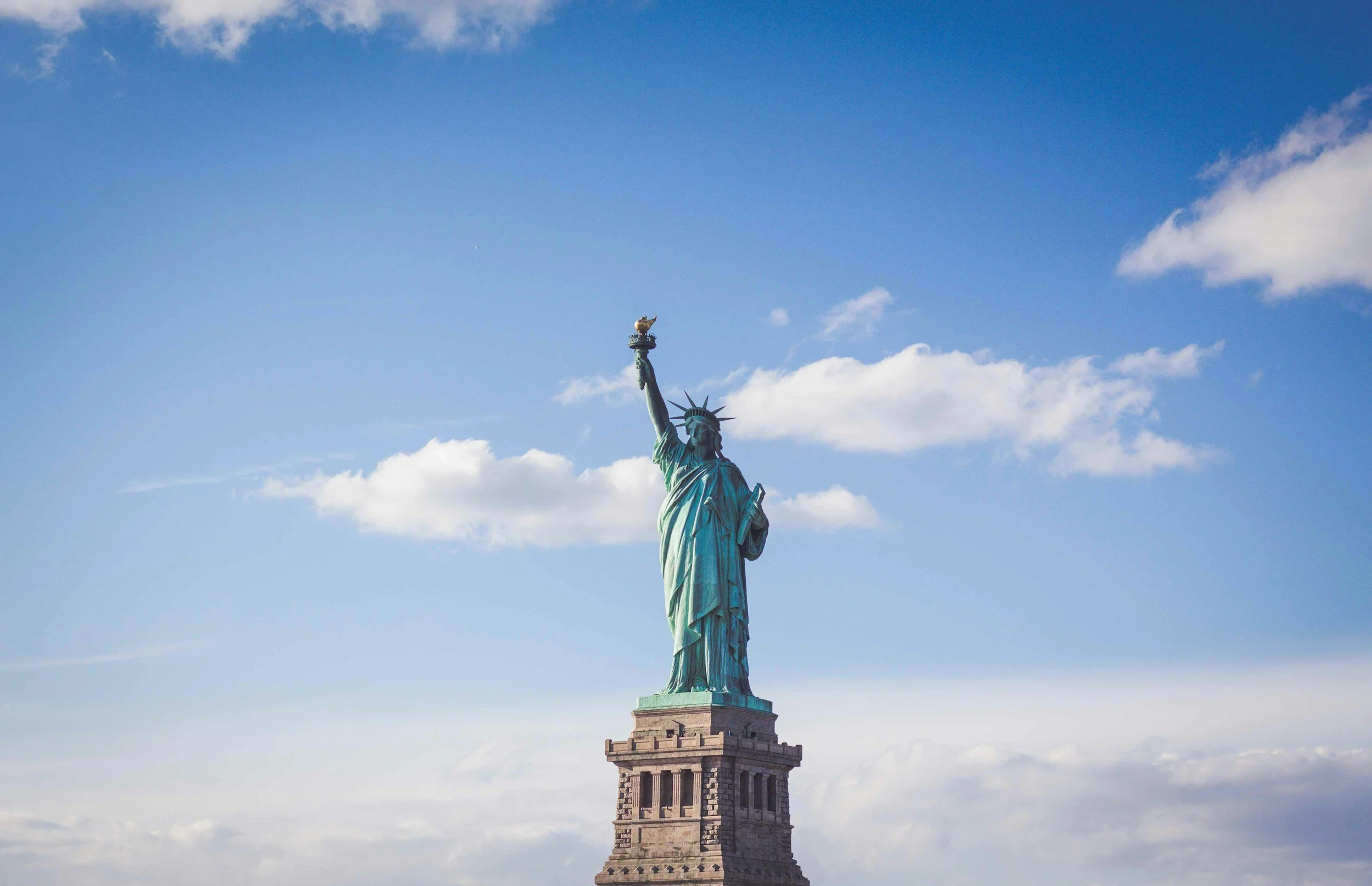
Immigrants make this country.
ICE breaks it.
If you have an encounter with ICE, remember your rights
What is I.C.E?
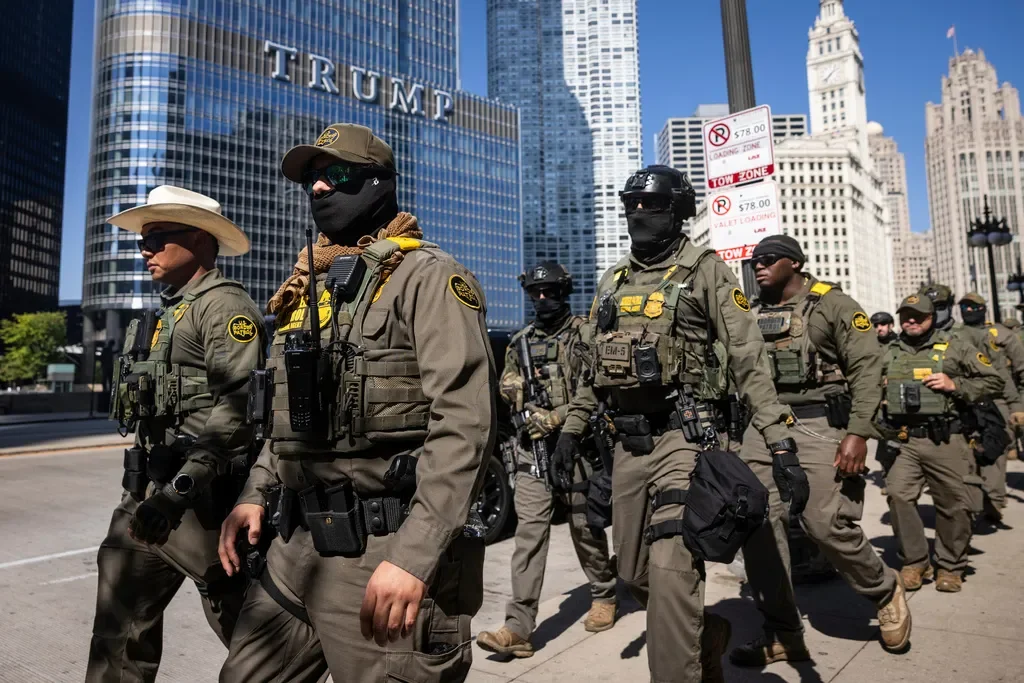
U.S. Immigration and Customs Enforcement (ICE) is a federal law enforcement agency created in 2003 as part of the Department of Homeland Security. Born from the aftermath of 9/11, ICE merged the enforcement functions of the former Immigration and Naturalization Service and the U.S. Customs Service. Today, it operates with over 20,000 personnel across 400+ offices and an annual budget of nearly $29 billion (NPR). Its stated mission is to enforce federal laws governing border control, customs, trade, and immigration, but its impact goes far beyond these words on paper.
ICE has two primary operational arms: Homeland Security Investigations (HSI), which investigates transnational crime, and Enforcement and Removal Operations (ERO), which arrests, detains, and deports immigrants. While ICE enforces over 400 federal statutes, it is ERO's work—the detention and deportation of undocumented immigrants—that has made the agency one of the most visible and controversial forces in American immigration enforcement.
Immigration in the United States
a brief history
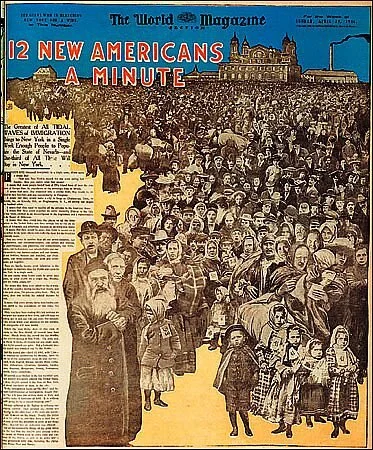
Immigration enforcement in America has always been shaped by economics, racism, and shifting political winds. The Chinese Exclusion Act of 1882 was the first law to explicitly ban immigration based on ethnicity, setting a precedent for exclusionary policies that would persist for over 80 years. The 1924 Immigration Act established the National Origins Formula, designed—in the words of its own architects—to "preserve the ideal of U.S. homogeneity" by severely restricting arrivals from Southern and Eastern Europe, and barring nearly all Asian immigration.
During World War II, the contradictions deepened: Executive Order 9066 imprisoned Japanese Americans in internment camps while the Bracero Program recruited Mexican workers to fill labor shortages. Between 1942 and 1964, over 4 million braceros worked on American farms and railroads—yet even during this period, mass deportations of Mexican workers occurred, with as many as 1.3 million people removed from the country despite having been actively recruited to work here.
The Immigration and Nationality Act of 1965 abolished the racist quota system and prioritized family reunification and skilled workers. Yet it also imposed the first-ever cap on Western Hemisphere immigration and ended the Bracero Program. These changes disrupted decades of circular migration patterns, inadvertently creating the conditions for what would later be called "illegal immigration." Former braceros, unable to find work in Mexico's struggling economy, crossed the border without documentation. The foundation was laid for the modern immigration enforcement system.
The 1996 Illegal Immigration Reform and Immigrant Responsibility Act (IIRAIRA) dramatically expanded enforcement powers, criminalized border crossing, and introduced mandatory detention for certain immigrants. Then came September 11, 2001. In response to the attacks, Congress passed the Homeland Security Act of 2002, creating the Department of Homeland Security in the largest government reorganization since the formation of the Department of Defense. On March 1, 2003, ICE was born.
What’s Happening Today?
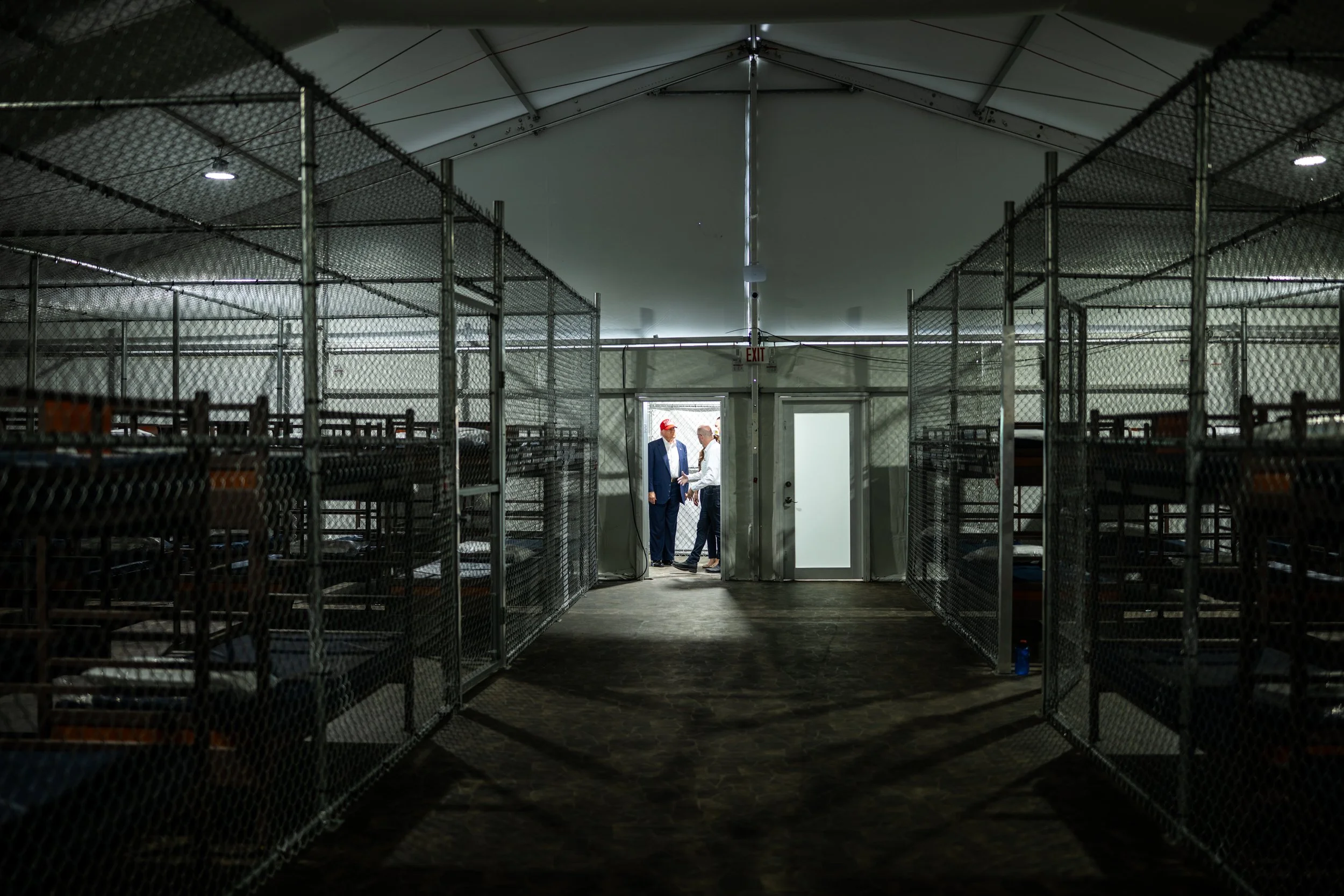
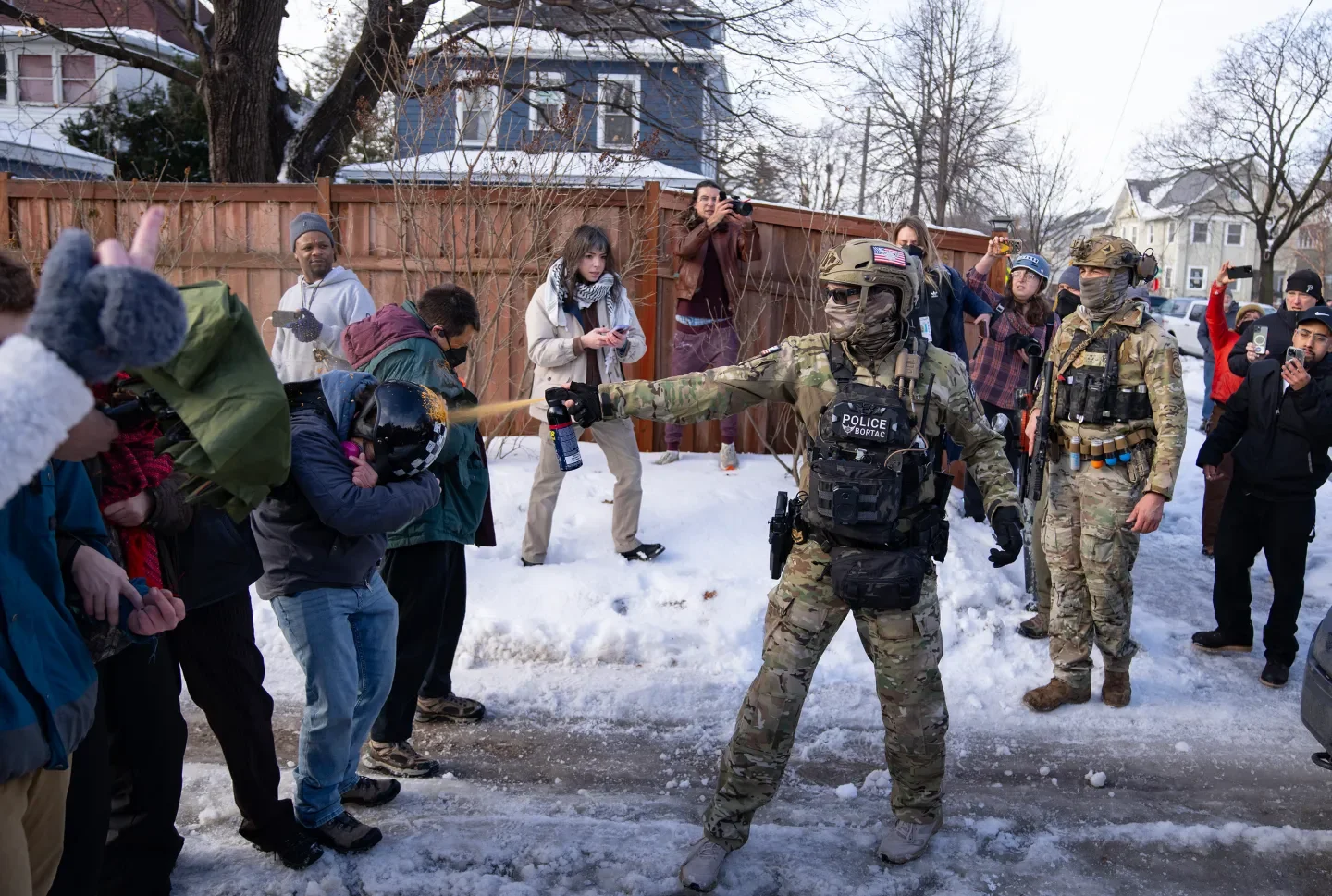
Since Donald Trump returned to office in January 2025, ICE has undergone an unprecedented expansion. The number of people held in immigration detention has surged from roughly 40,000 at the start of the year to nearly 70,000 by December—the highest level in history. Congress authorized $45 billion for ICE detention through 2029, with the potential to more than triple capacity. This is no longer a deportation system designed for public safety, but a system designed to produce deportations, legal or not.
The data tells a stark story. Arrests of people with no criminal record have risen sharply, and only a small share of those in detention have violent convictions. Enforcement has shifted away from a narrow “public safety” focus toward broad, high-volume operations that now reach workplaces, farms, campuses, private homes, immigration court hearings, and even routine ICE check-ins—places where many immigrants once expected at least minimal procedural safety.
As detention expands, conditions inside facilities have deteriorated to inhumane levels. Attorneys, families, and human-rights groups report severe overcrowding, unsanitary living spaces, limited access to clean water and showers, inadequate food, and delays or denial of essential medical care. Accounts describe constant lighting, prolonged solitary confinement, language-access failures, and transfers that make it difficult for families or lawyers to locate detainees. Children and medically vulnerable people have faced especially harmful conditions, with reports of ignored medical needs and extended confinement without reliable access to education or appropriate care.
Oversight has also weakened as the system grows. Transparency has declined, legal battles over access to facilities have intensified, and independent monitoring has become more restricted. At the same time, ICE has increased highly visible raids in major cities and large worksites, and prior limits on enforcement in places like schools, hospitals, and houses of worship have been rescinded—expanding where arrests can occur and deepening fear in everyday community spaces.
Deportations have risen sharply alongside an explicit mass-removal goal built around high arrest volume, expanded detention, and accelerated removals.
This is mass deportation. It is also a detention regime that separates families, punishes civil immigration status as if it were a violent offense, and operates with shrinking transparency. The human cost is purposeful for publicity. The message is clear: deportations aren’t safety, but power, control, and fear.
What is I.C.E.’s role?
ICE operates under Section 287(g) agreements, which allow state and local law enforcement officers to perform federal immigration functions. As of January 2026, ICE has signed more than 1,300 such agreements over forty states—a dramatic increase from the 135 agreements in December 2024. These partnerships offload federal enforcement onto local communities and force local police to act as immigration agents, eroding trust between immigrant communities and law enforcement.
Sanctuary cities—jurisdictions that limit cooperation with ICE—have become a flashpoint in the immigration debate. Contrary to the Trump Administration’s claims, sanctuary policies do not harbor criminals or increase crime. Research shows that when local law enforcement and ICE work together, immigrant and Latino communities are less likely to report crimes out of fear of deportation. Sanctuary policies improve public safety by ensuring that all residents feel safe interacting with police, regardless of immigration status.
Despite its aggressive and dehumanizing tactics, ICE has fallen short of its arrest goals. The administration set a target of 3,000 arrests per day but has averaged fewer than 1,000. In spite of this, the Trump Administration is inflating the presence of deportations in media: posting images of shackled deportees on social media, manipulating Google searches, and allowing celebrities to accompany ICE raids in what many describe as glorifying violence and promoting a white nationalist agenda.
apartheid - a system of prolonged and cruel discriminatory treatment by one racial group of members of another with the intention to control the second racial group
The immigration system in the United States is not broken. It is working exactly as designed: to criminalize, detain, and remove people who are seeking safety, opportunity, and a better life. From the Chinese Exclusion Act to the mass deportations under Trump, this country has a long history of using immigration enforcement to control, exclude, and punish minorities.
ICE is the newest version of this system. And it is operating at a scale we have never seen before.